
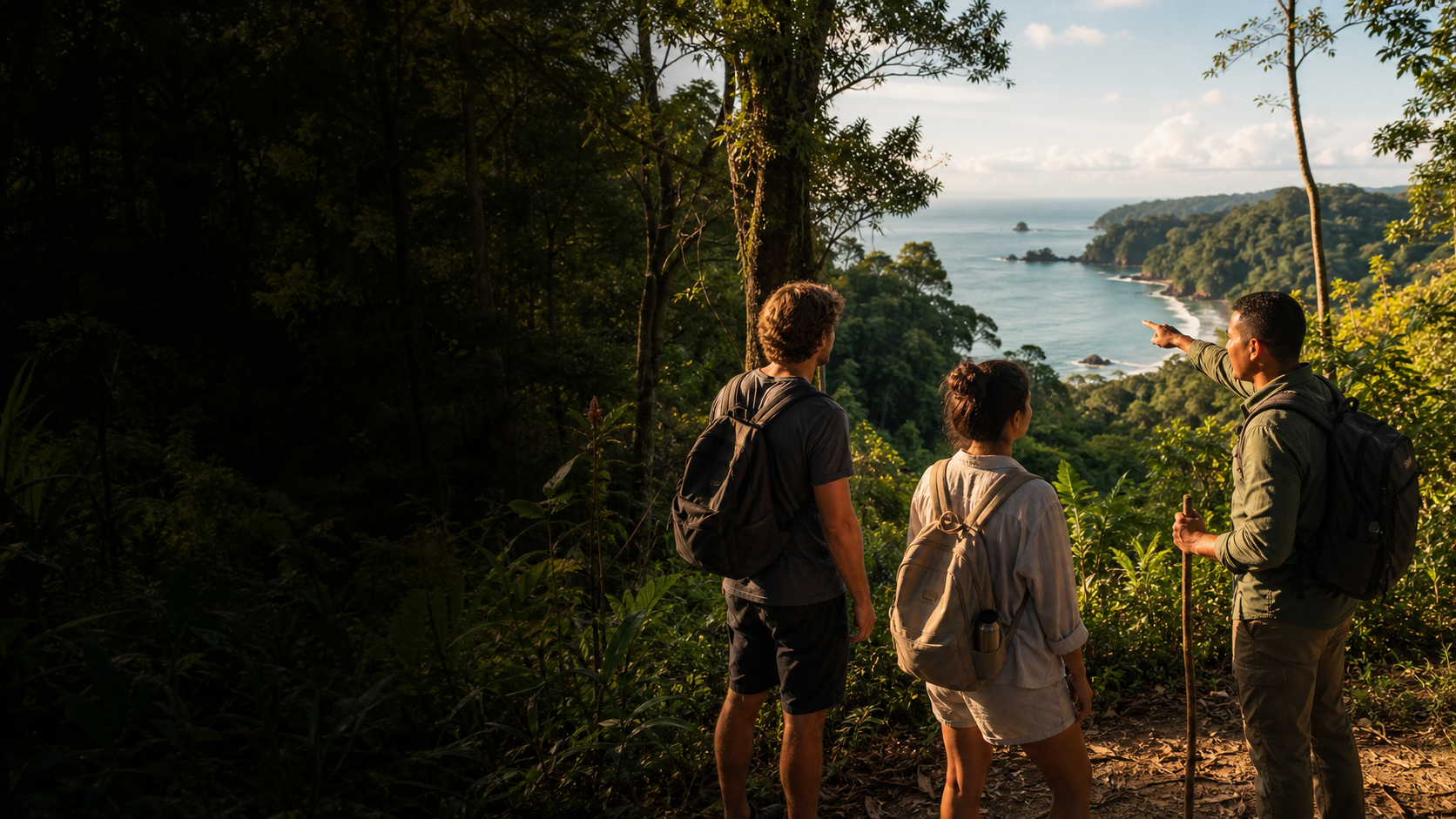
Go with trained local eyes
Naturalist guides recognize calls, movement and habitat clues that most visitors miss. Spotting scopes also allow close views without approaching animals.
Choose the right time and habitat
Early morning is productive for many birds and mammals, while night walks reveal frogs, insects and nocturnal species. Mangroves, cloud forest and dry forest support very different wildlife communities.
Keep encounters wild
Never feed, touch, call or surround wildlife. Avoid providers that stage contact, guarantee wild sightings or encourage unsafe distances.
- Keep voices low
- Stay on marked routes
- Follow photography restrictions
- Carry out everything you bring
Value the whole ecosystem
A rewarding tour is more than a checklist. Plants, insects, fungi, water and local conservation work explain why larger animals can thrive.
 La Fortuna · Adventure